
Mary, bookworm

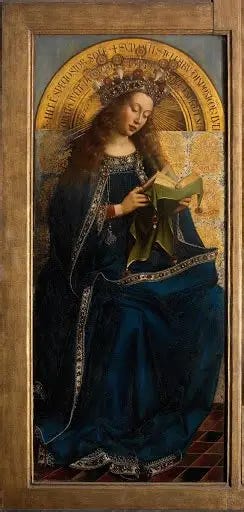
Above is a panel from the 15th century Ghent Altarpiece, by the Dutch master Jan van Eyck. It shows the Virgin Mary, crowned as queen of heaven, reading an ancient manuscript.
It’s just one of many fascinating works of art that show Mary as a student of the written word.
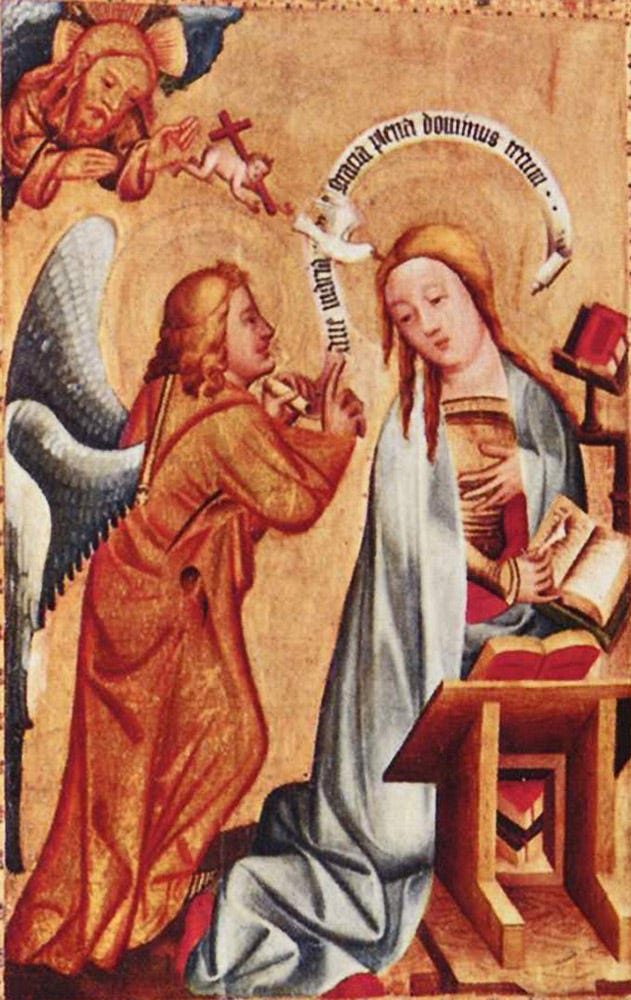
Zena Hitz, in her outstanding book Lost in Thought: The Hidden Pleasures of the Intellectual Life (Princeton, 2020) names others, including Bertram’s 14th century Grabow Altarpiece, below.
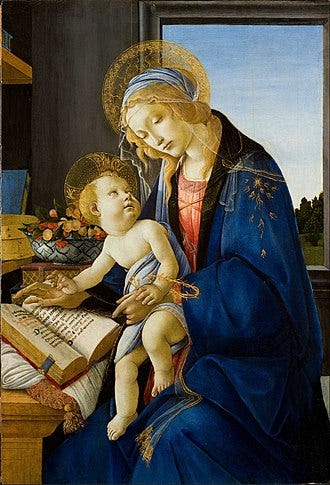
There are plenty more, including Botticelli’s Madonna of the Book (15th Century)
Likewise, many Annunciation scenes have been produced with Mary and manuscripts, sometimes holding a small Psalter.
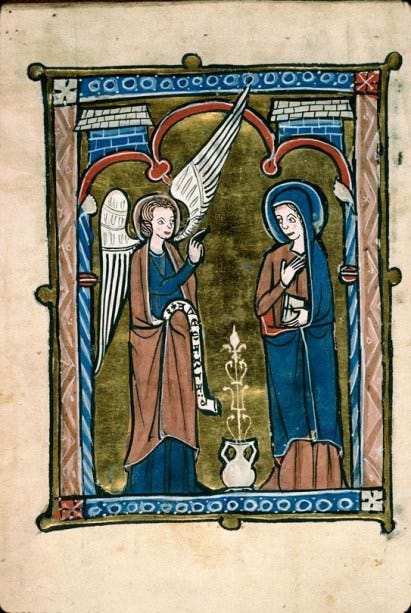
And this Anunciation scene from an Italian master (unknown) of the 17th century.
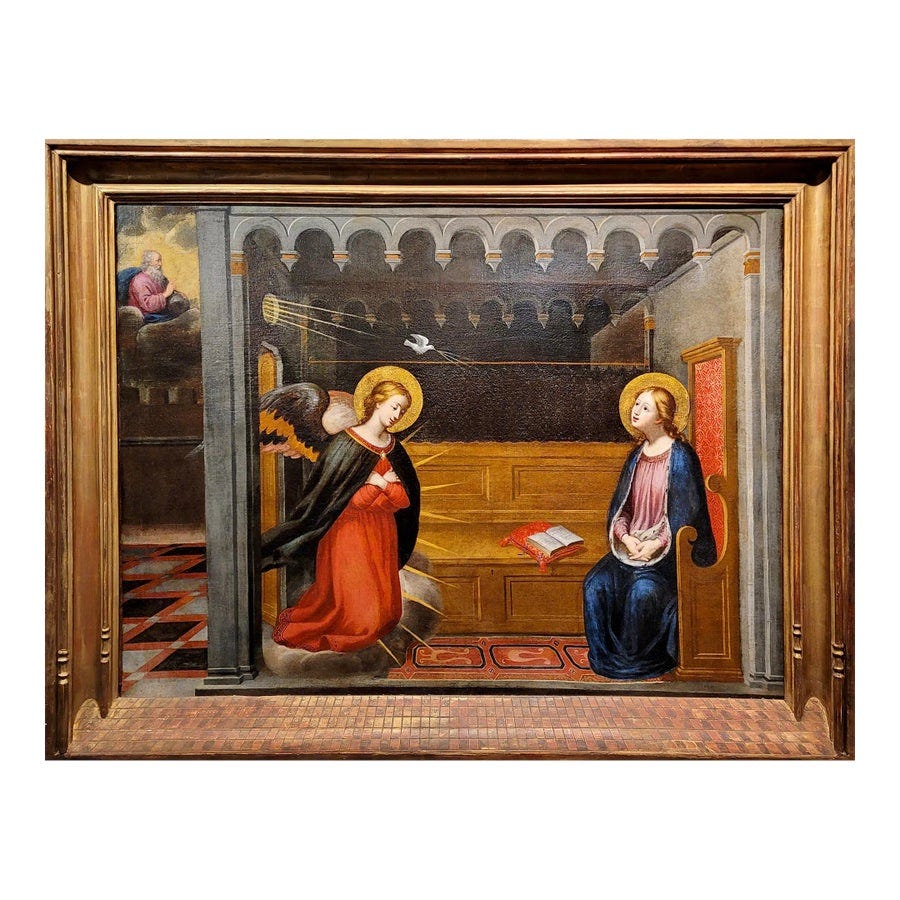
Hitz, in her book, writes, “According to a tradition first attested by the ancient Bible commentator Origin (Homilies on Luke 6:7), Mary was learned in the Hebrew scriptures; she had studied the law and meditated daily on the prophets. So she understood that the angel’s message that she would bear a son was part of God’s plan for salvation. Her wisdom and learning explain the subtlety with which she responds to the angel’s announcement in the Gospel of Luke.”
Mary’s love of study is held up by the church fathers as a model for Christian believers. Ambrose includes “studious in reading” in a catalog of her virtues.
I have a friend to thank for sharing this passage where St. Ambrose describes the Virgin Mary:
"She seemed ... to be less alone when she was alone. For how should she be alone, who had with her so many books, so many archangels, so many prophets?"
Her undoubted influence on St. Luke's AND St. John's Gospels forms a reasonable complement to this valuable insight.