
more Fante, please

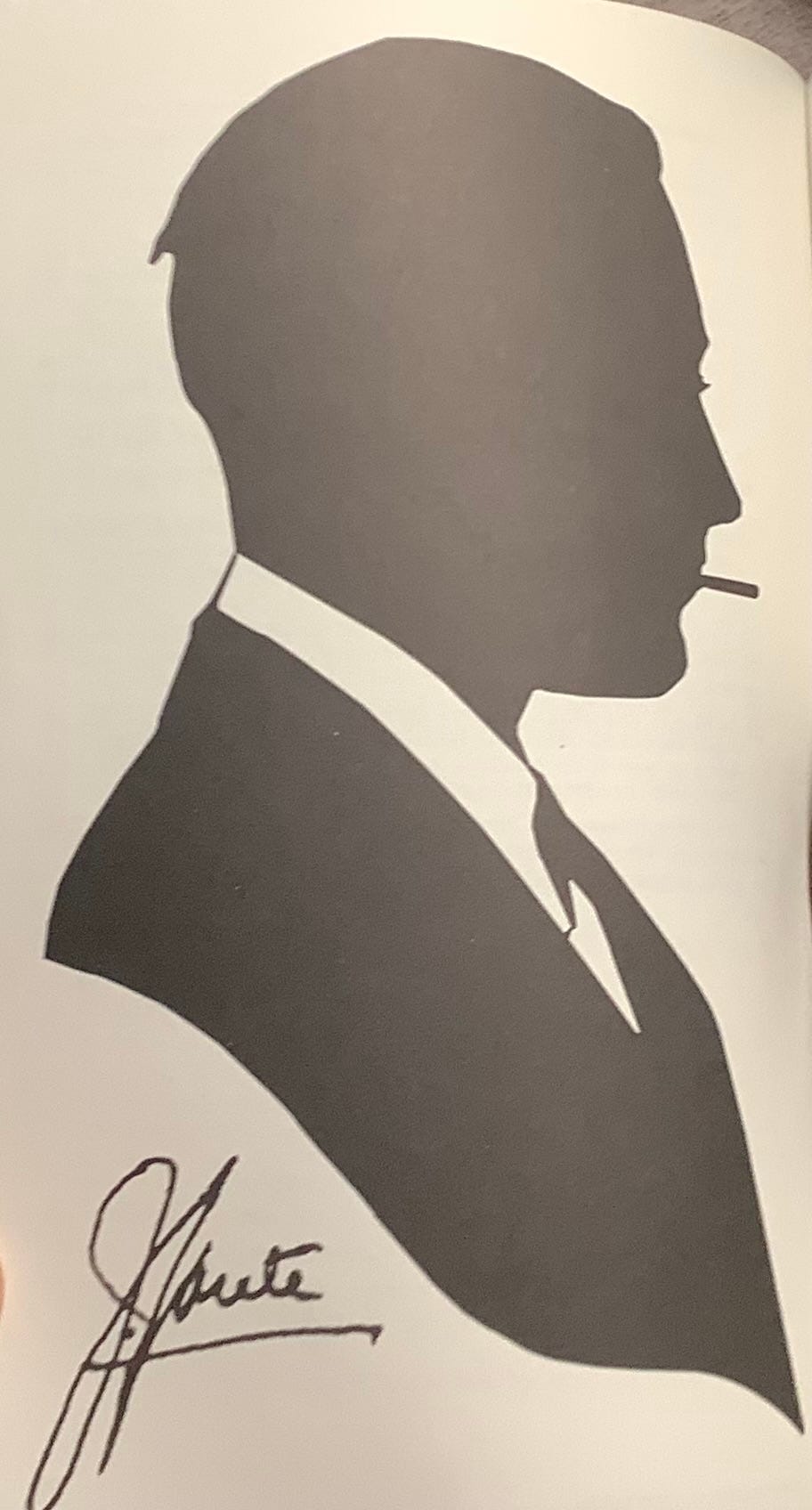
In our last post, introducing writer John Fante, we closed promising more tidbits of his life while noting that Martin Sheen attended Fante’s requiem Mass (more on that follows).
Fante, born in 1909, left Colorado at age 20 for Los Angeles where he struggled mightily, and one might say, heroically, before finding success as a writer; impoverished, hungry, ill-dressed, and often homeless, but for the goodness of friends, throughout much of the early 1930s.
Even so, he managed to network among the “who’s who” of arts and letters not only in Los Angeles, and Hollywood, but also via postal mail, beginning with H. L. Mencken, then editor of the magazine, The American Mercury.
Fante sent numerous notes accompanied by short stories to Mencken who replied with encouraging letters. He finally accepted one, and then another, and another of Fante’s stories, beginning with “Altar Boy,” a story reminiscent of Fante’s Colorado childhood.
Fante’s short stories are available in several collections, including The Wine of Youth and The Big Hunger. Two novellas are collected in West of Rome.
Mencken became Fante’s literary mentor. “I would have done anything to get the praise of H. L. Mencken. I adored the guy,” he recalled later in life.
In February of 1933 Fante received an offer from Alfred Knopf, publisher of Mencken’s magazine, to write a novel. The contract included a sizable advance, enough to keep him in good stead for a year or more. According to biographer Stephen Cooper, in the days after he received the contract Fante carried it with him like a trophy wherever he went and “at some point turned his attention to the contract’s final page, where he had signed his name. Again, he uncapped his pen. Beneath Knopf’s signature, which was directly under his own, he scrawled the following addendum:
very drunk and eating soft-boiled eggs at the Newhouse Cafe on March 6, 1933 at 11:53 a.m. and God bless the lord, even tho the banks are closed, and God bless Mencken.”
That, by the way, is vintage Fante.
Then 23, he suddenly had a bit of cash and impulsively spent some having the above silhouette traced by a local artist. The following day he sent it to his mother.
Fante was devoted to his mother, a devout Catholic. John struggled with the faith throughout his adult years, but he died (1983) with the the Last Rites of the Church, his mortal remains interred at Holy Cross Cemetery in Culver City, California, following a requiem Mass celebrated in Latin at Our Lady of Malibu church.
In Full of Life, Cooper reports, “In a rear pew, Martin Sheen attended closely to the liturgy, rising and kneeling and responding in Latin to all the antiphonal prayers.”
Sheen was one of Fante’s Hollywood connections garnered throughout his 30 years as a screenwriter. Fante’s thirteen filmography credits include Dinky (1935), The Golden Fleecing (1940), Youth Runs Wild (1940), My Man and I (1952), Full of Life (1956), Walk on the Wild Side (1962), and Something for a Lonely Man (1968).
Presently I’m working on a deep dive into the many surprising, striking similarities between Fante (1909-1983) and Jack Kerouac (1922-1969) in life and works, but oddly, the two seemed not to even notice each other.
For more on Fante, see Stephen Cooper’s outstanding biography, Full of Life, a Biography of John Fante (Angel City Press, 2000).
His son, Dan Fante (1944-2015) also a writer, has written a memoir (on my TBR pile) Fante: A Family’s Legacy of Writing, Drinking and Surviving – A Raw Literary Memoir of Father, Son, and the Typewriter That Healed Them (Harper, 2011).
Ask the Dust was a book recommendation from my old man’s college years that earned its keep, much like Naked Lunch