
pencil sharpeners, thousands of ‘em


You may have felt it too, that certain level—indeed, high level—of satisfaction when you get it just right, maybe not the first or second, but the third or even fourth try, you stick with it ‘til you get it right.
I’m recalling the challenge and joy of the vintage pencil sharpener, silver, oval shaped, often mounted on the classroom wall, sometimes atop the teacher’s desk, doubtless forgotten by many.
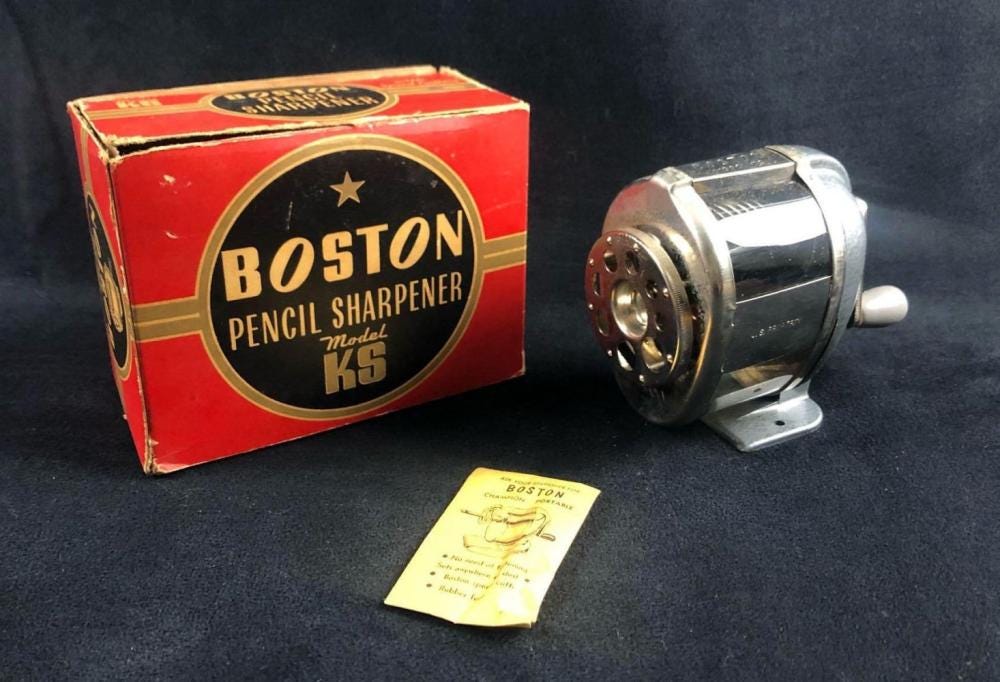
It started, I think, in second grade. I loved everything about it: the crank, the sound, the smell of the shavings when Mrs. Welms asked me to empty it, brushing off the inside gears, everything; a miracle machine, a thing of beauty.
And something about the challenge of getting the pencil inserted, but not too far, just far enough, not pushing too hard, but hard enough, getting it just right, cranking, and knowing (guessing) when it was “done.”
And the pride of accomplishment when, finally it came out just about perfect.
And then the payoff: blowing residue from the tip.

All that, but I never imagined anyone having the hobby of collecting pencil sharpeners, so I was intrigued to discover the Paul A. Johnson Pencil Sharpener Museum located in Logan, Ohio, boasting a collection of nearly 5,000 sharpeners, some dating back to the early 1800s.

When Paul Johnson retired in 1988, his wife Charlotte encouraged him to find a hobby. She gifted him a few car-shaped pencil sharpeners and suggested he start a collection representing different modes of transportation. That small gesture sparked an unexpected fascination, one that eventually led to a collection spanning thousands of sharpeners from across the globe.
A Growing Passion
Paul’s collection began with just a handful of pieces, but it quickly grew. Over time, he amassed 1,700 unique pencil sharpeners crafted from metal, wood, glass, and plastic. By the time of his passing in 2010, Paul had lovingly collected 3,450 sharpeners, all arranged and displayed with care.
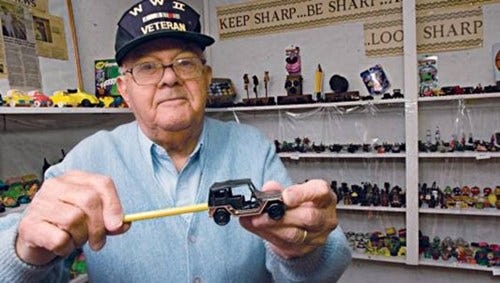
Following Paul’s passing, Charlotte made a generous decision—to relocate the museum and entire collection to the Hocking Hills Regional Welcome Center so that more people could enjoy Paul’s remarkable hobby. The move was no small feat:
Each shelf was numbered
Every sharpener was photographed in its place
Every item was boxed, labeled, and transported with care
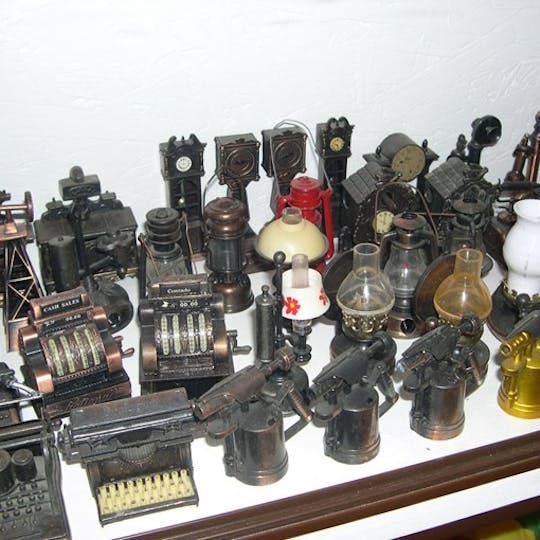
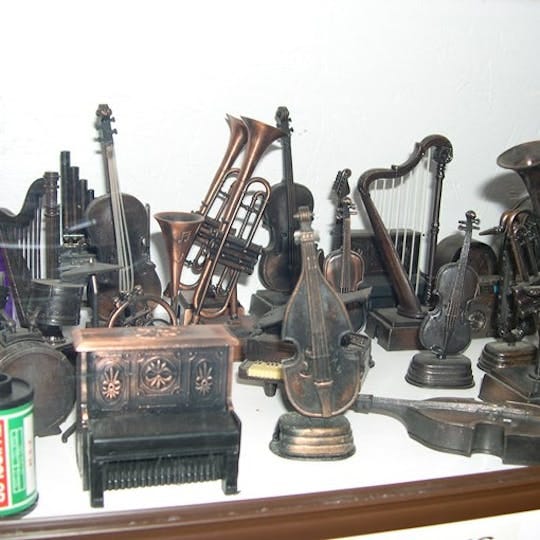
The museum structure itself was moved via flatbed truck and set on a carefully prepared timber foundation. Visitors watched in awe as this quirky piece of history found its new home.
Honoring the Original Arrangement
Once at the Welcome Center, the collection was restored to Paul’s exact specifications. Thanks to detailed photographs, every sharpener returned to its original spot. Paul had thoughtfully grouped his pieces into themes like Animals, Holidays, Food, Games, History, Space, and Zodiac Symbols, turning the exhibit into a visual storybook of eras and ideas.
A Museum Reimagined
In 2022, the original shed that housed Paul’s collection was replaced with a modern, fully accessible display space. The Grand Reopening took place in January 2024. Today, the collection is protected in museum-quality cases, allowing visitors to view each sharpener up close while preserving their delicate features.
An Unexpected Addition
That same year, the museum’s story grew even richer with the arrival of a second extraordinary collection, gifted by the family of Frank Parades of Tampa, Florida. Frank’s contribution brought the total to an estimated 5,000 pencil sharpeners, forming one of the most extensive public displays in the country.
A passionate antique collector and car restorer, Frank loved sharing his 1913 Ford Model T and 1930 Ford Model A at shows across the Southeast. It was during a flea market visit for car parts that Frank discovered his first die-cast pencil sharpeners, beginning a hobby that would span continents and decades.
After retirement, Frank expanded his collection through global friendships with fellow collectors in the Netherlands, Asia, and across the U.S. West Coast. His sharpeners became his souvenirs—ranging from everyday die-cast models to rare antiques dating back to the early 1800s.
Frank was captivated by the craftsmanship of early pencil sharpeners, which evolved from sandpaper and blade models to hand-crank mechanisms. Many of his pieces came from Valencia, Spain, where the Play-Me brand produced functional, intricately designed sharpeners.
Among Frank’s most prized possessions were rare models from EMB Marti, famed for their elaborate detail and precision. Collectors often pay over $100 for these vintage treasures, each one a tiny marvel of design.
Like Paul, Frank had an eye for detail—recognizing the subtle differences that make each sharpener special. No duplicates, no fillers—just thousands of tiny, unique works of art.
In late 2022, Frank’s wife, Stephanie Parades, discovered the Paul A. Johnson Pencil Sharpener Museum. Knowing instantly it was the perfect home for Frank’s legacy, she generously donated his 1,500-piece collection to be displayed alongside Paul’s.
“His eyes would light up with every new sharpener. Sharing that same wonder with others is the best way to honor him.”— Stephanie Parades
A Tribute to Passion and Play
Together, the Paul Johnson and Frank Parades collections represent far more than novelty. They celebrate a shared joy in collecting, a love for storytelling through objects, and the beauty of finding wonder in the everyday.
Whether you’re a serious collector, a history lover, or just curious about the unexpected, the Paul A. Johnson Pencil Sharpener Museum offers a one-of-a-kind experience in the heart of Hocking Hills.1
Who knew? Hobbies rock…and history rocks!
Stay sharp out there, people.
explorehockinghills.com
Who would’ve thought?! Thanks for bringing this to us, Jim🙏. Just confirms how sharp a fellow you are.
Looks like a field trip….I’ll bring the Ticonderogas.✏️