
The Learned Blacksmith
Elihu Burritt


A reading room while waiting in a blacksmith shop in the 1890s? I came across the above notice in the Philadelphia Inquirer, dated November 15, 1897, while researching the mysterious death of a Philadelphia priest in the early 1900s (that story coming soon). It reminded me of “The Learned Blacksmith,” Elihu Burritt (1810-1879).
Burritt was the focus of a piece written by Bishop Bonaventure Broderick who, in the late 1930s, wrote a weekly column for the Millbrook (NY) Round Table, titled “Things, Events, and Men.”
Burritt was a blacksmith, a voracious reader, prolific writer, lecturer, world traveler, and author. Armed with a strong work ethic, he was judicious in his use of time as we see in the bishop’s column, originally written in 1939. (The piece is also included in The Wit and Wisdom of Bishop Bonaventure Broderick: His Millbrook Round Table Columns)
In his columns, the bishop sought to impart a lesson from his own life experiences or those of others, in this case five brief remarkable entries from Burritt’s 1837 diary:
The Learned Blacksmith.
For the edification of those modern social reformers who are so strenuously advocating that the workweek be limited to thirty hours the entry made in his diary for the five days beginning June 18, 1837, by Elihu Burritt, surnamed “The Learned Blacksmith,” is here reproduced:
Monday, June 18, headache; forty pages Cuvier's Theory of the Earth; sixty-four pages of French; eleven hours forging.
Tuesday: sixty-five lines of Hebrew; thirty pages of French; ten pages Cuvier's Theory; eight lines Syrian; ten ditto, Danish; ten ditto Bohemian; nine ditto Polish; fifteen names of stars.
Wednesday: twenty-five lines of Hebrew; fifty pages of astronomy; eleven hours forging.
Thursday: fifty-five lines Hebrew; fifty pages of astronomy; eight ditto Syrian; eleven hours forging.
Friday: unwell, twelve hours of forging.
High School students might also profitably take notice of this extract. As “The Learned Blacksmith” was born at New Britain, Conn., December 8, 1810, and died there March 7, 1879, having thus lived about sixty-eight years, it is evident that neither his long hours of hard work nor his great amount of diligent study materially shortened his span of life.
NB: “Cuvier’s Theory” is a reference to an 1813 essay written by Georges Cuvier, a French naturalist.
For more on Burritt’s fascinating life see the bio at the Central Connecticut State University library here.
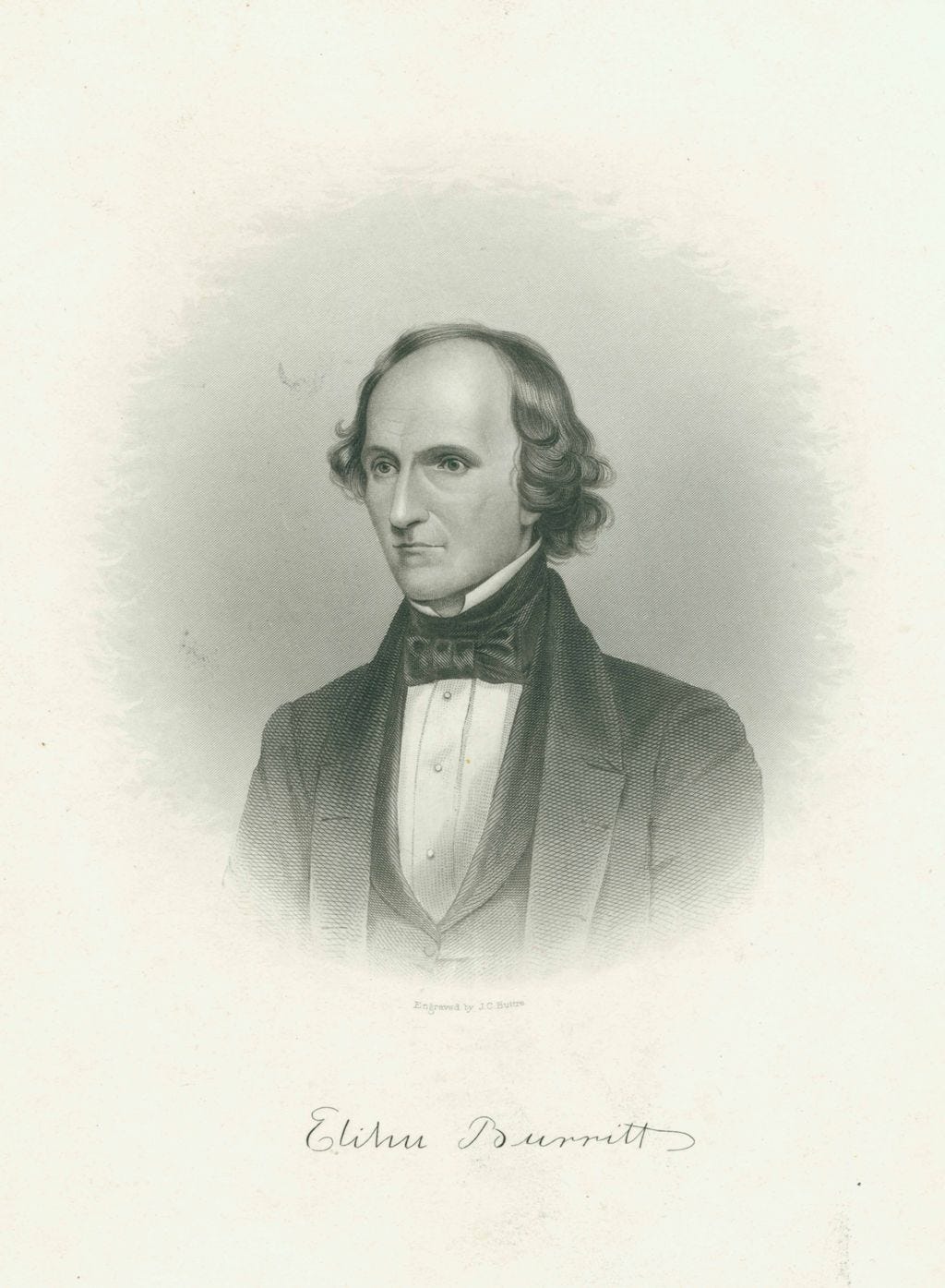
Burritt almost as engaged as the author of this essay!
I like “fifteen names of stars”…